
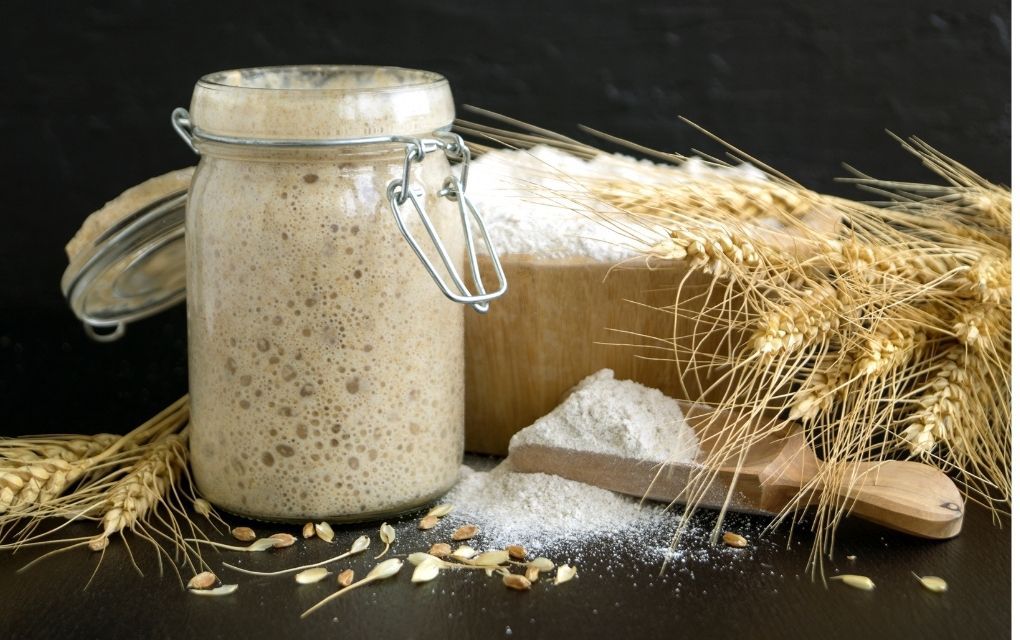
You fed your starter for days. Bubbles appeared, the jar smells tangy, and now you wonder if it is strong enough to leaven a loaf. Timing matters. Use the starter too early and your dough may stall. Wait too long past peak and the same problem can happen. This guide shows the signs that tell you a starter is ready to bake with.
New to growing a culture from scratch? Start with our 7 Day Countdown to Starting a Sourdough Starter. When your jar looks active, come back here to confirm it is bake-ready. You can also browse more guides on the yoursourdoughstart.com homepage.
The Float Test
The float test is the quickest check most home bakers use. Stir your starter, then drop a small spoonful into a glass of room-temperature water. If it floats on the surface for several seconds, the culture holds enough gas to raise bread. If it sinks right away, feed it again and test at the next peak.
Use a mature starter that has been fed and allowed to rise. A thin, runny mixture right after feeding will not give you an accurate result.
Volume and Peak Timing
Watch how high the starter climbs in its jar after each feeding. A healthy culture often doubles, sometimes triples, before it begins to fall. That high point is called peak. Most bakers mix dough within an hour or two of peak, while yeast activity is still strong.
Mark the starting level with a rubber band or tape so you can see growth at a glance. If the starter rises slowly or stalls below its usual height, it may need warmer temperatures, more frequent feedings, or a different flour ratio.
Smell and Appearance Cues
Ready starter smells pleasantly sour, like yogurt or ripe fruit. It should look bubbly throughout, not just on top. A layer of dark liquid on the surface, called hooch, is normal if you have not fed for a while. Stir it in or pour it off, feed the starter, and wait for the next rise before baking.
Strong nail-polish or rotten smells usually mean the culture needs more regular feedings. See our Sourdough Lexicon for definitions of terms like active and levain that you will see in recipes.
When the Starter Is Not Ready Yet
Skip baking if your starter shows any of these signs:
- Little or no rise four to six hours after feeding at room temperature
- Only a few surface bubbles with a dense, paste-like texture below
- A sharp, unpleasant odor that does not improve after two or three daily feedings
- Failed float tests on two consecutive peaks
Young starters under two weeks old often need more time and consistent feedings before they can lift a full loaf. Patience here saves a frustrating bake day.
Bake Your First Loaf
Once your starter passes the float test and rises predictably, you are ready to mix dough. Our 7 Steps to Great Sourdough Bread Overnight walks through an evening mix and a morning bake that works well with a lively culture.
Keep feeding on schedule even after your first successful loaf. A starter that is fed regularly stays reliable for pancakes, sandwich bread, and every bake that follows.



Recent Comments